

By Earth Songs Gardening Editorial Team · Updated 2026-07-23
Watering schedules have been limited to before 10:00am or after 4:00pm to reduce evaporation loss. Keep landscapes hydrated efficiently under Vail’s 2026 restrictions. Earth Songs Gardening, based in Avon, recommends smart irrigation timing and drought-tolerant plantings to protect Gore Creek and Eagle River while sustaining healthy lawns and gardens.
Vail’s 2026 Stage III restrictions, adopted after the dry 2025/26 winter to protect Gore Creek and the Eagle River, demand smart irrigation scheduling, deep-but-infrequent watering, mulch retention, and drought-tolerant plantings. Earth Songs Gardening, serving the Vail Valley from Avon, designs water-wise landscapes and irrigation systems built to survive restrictions without sacrificing curb appeal.
Key Takeaways
-
Vail implemented an outdoor water reduction plan in June 2026 due to extremely dry winter conditions.
-
The town’s 2026 watering schedule restricts outdoor water use for landscaping during peak drought response periods.
-
Earth Songs Gardening’s 12-person team helps Avon-area residents comply with Vail’s specific irrigation timing requirements.
-
Smart irrigation systems reduce water consumption while maintaining landscape health during Vail’s conservation restrictions.
Vail implemented an outdoor water reduction plan in June 2026 due to extremely dry winter conditions.
The town’s 2026 watering schedule restricts outdoor water use for landscaping during peak drought response periods.
Earth Songs Gardening’s 12-person team helps Avon-area residents comply with Vail’s specific irrigation timing requirements.
Smart irrigation systems reduce water consumption while maintaining landscape health during Vail’s conservation restrictions.
Why Are Vail’s 2026 Water Rules So Strict?
An unusually dry 2025/26 winter left mountain snowpack thin, forcing the Town of Vail to adopt an outdoor water use reduction plan for summer 2026. Vail water restrictions 2026 exist because snowmelt, the valley’s primary water source, simply didn’t materialize in sufficient volume. Homeowners and property managers now face a landscape season where every gallon counts.
The Vail Town Council approved the plan on June 2, giving property owners a firm timeline to adjust irrigation habits before peak growing season. That approval wasn’t a symbolic gesture. It set enforceable limits that shape how lawns, gardens, and commercial grounds get watered across Eagle County this year.
What is the goal behind the restrictions?
The plan’s central purpose is protecting Gore Creek and the Eagle River. Gore Creek water conservation efforts aim to preserve riparian and wetland habitat that supports fish, insects, and other wildlife dependent on stable stream flows. Keeping water in these waterways also helps guarantee that domestic water supply remains reliable for homes and businesses throughout the valley.
Why does this matter for local landscapes?
Brown patches and stressed shrubs aren’t inevitable under these rules, but ignoring them makes damage far more likely. Consider the stakes:
-
Untreated drought stress weakens root systems, making lawns vulnerable to disease and pests.
-
Non-compliant watering schedules can trigger penalties from local water authorities.
-
Poorly adapted landscapes require more emergency intervention, driving up long-term maintenance costs.
Untreated drought stress weakens root systems, making lawns vulnerable to disease and pests.
Non-compliant watering schedules can trigger penalties from local water authorities.
Poorly adapted landscapes require more emergency intervention, driving up long-term maintenance costs.
Given ongoing drought conditions, understanding the current watering schedule has become essential for both residents and landscaping professionals working in Vail. Outlined in 2026 Vail Watering Schedule: Rules, Restrictions & Smart Irrigation Tips A Vail Valley landscaping company familiar with these seasonal rules helps property owners avoid violations while keeping landscapes resilient. Detailed in How to Stay Compliant with 2026 Vail Valley Water Restrictions Using Smart Irrig. Compliance and healthy grounds aren’t mutually exclusive goals — they require informed planning.
What Exactly Does ERWSD’s Schedule Require?
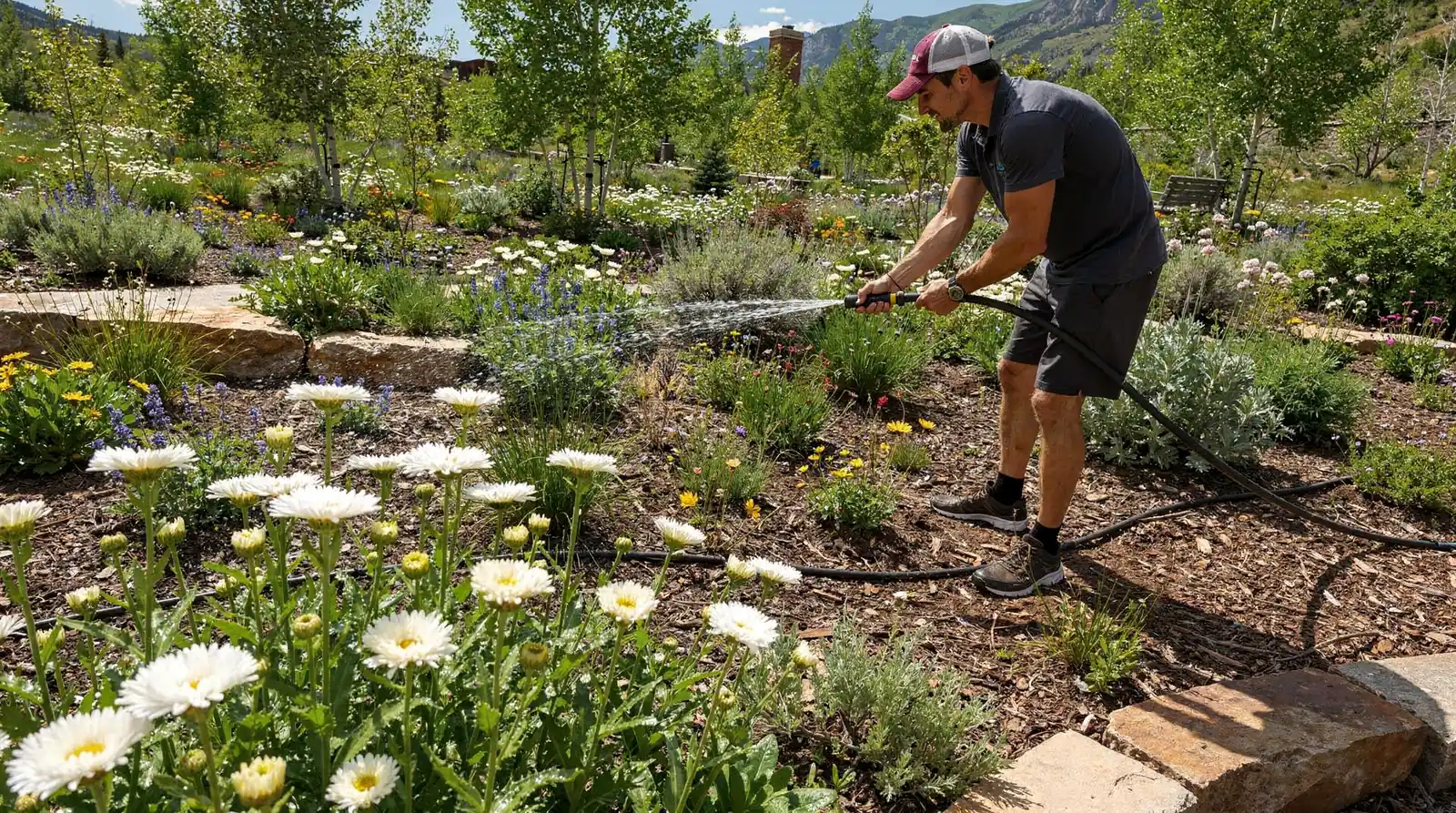
The ERWSD water restrictions limit outdoor landscape watering to two designated days per week. The Eagle River Water and Sanitation District set this schedule to conserve supply during the dry conditions affecting Vail this season. Landscapes across town, from condominium common areas to single-family lawns, fall under the same limits.
Reduced watering days serve a larger purpose beyond individual properties. The restrictions support Gore Creek water conservation efforts and help protect the Eagle River’s flow for fish and wildlife. Adequate domestic water supply for both residents and summer guests depends on this collective effort holding through peak season.
When should sprinklers actually run under the new rules?
Timing matters as much as frequency. The statewide watering model that ERWSD’s approach mirrors calls for irrigation before 10:00am or after 4:00pm. Midday watering loses significant volume to evaporation, wasting water that never reaches plant roots. Property managers running automated systems should confirm start times fall outside that window.
Do these rules apply the same way to every property?
Not necessarily — HOA-managed common areas and commercial landscapes sometimes carry additional requirements layered on top of the district’s base schedule. Confirming details directly with ERWSD before adjusting any irrigation controller avoids accidental violations. Waiting until midsummer to check the rules risks weeks of noncompliance and stressed turf.
Here’s what property owners and managers should verify before the season progresses further:
-
Which two days apply to a specific address or account
-
Whether HOA covenants add stricter limits on top of district rules
-
How controller start times align with the 10:00am–4:00pm restriction window
-
Whether hand-watering or drip irrigation exemptions apply to garden beds
Which two days apply to a specific address or account
Whether HOA covenants add stricter limits on top of district rules
How controller start times align with the 10:00am–4:00pm restriction window
Whether hand-watering or drip irrigation exemptions apply to garden beds
A Vail Valley landscaping company familiar with these rules can translate the schedule into a working irrigation plan. That local knowledge often makes the difference between a lawn that survives the restrictions. One that browns out by August.
What Triggers a Stage III Water Shortage?
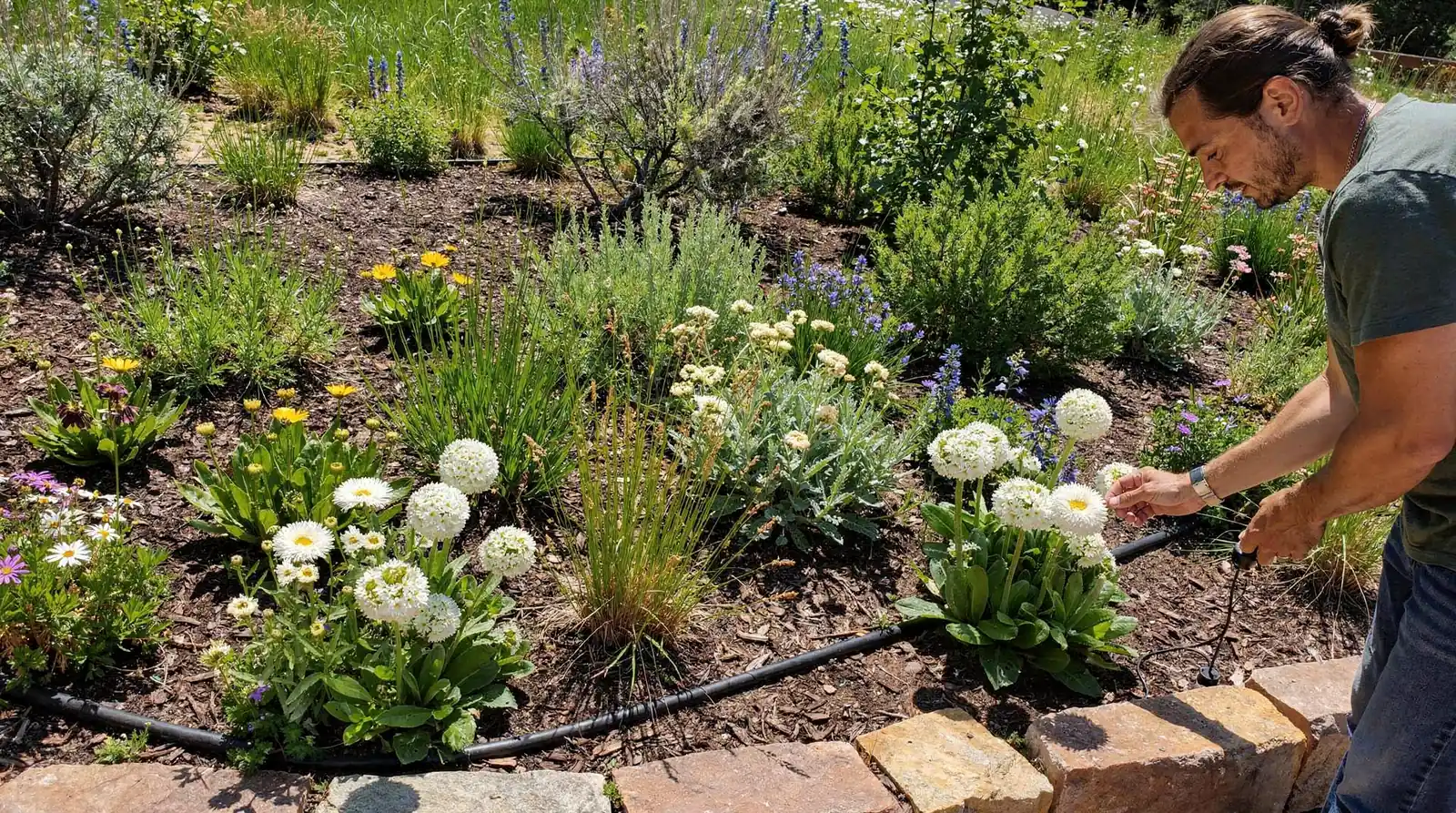
Drought conditions in the high country trigger stage escalations, not arbitrary decisions by local officials. Vail water restrictions 2026 followed a winter with far below-average snowpack, prompting the Town of Vail to approve an outdoor water use reduction plan in early June. Elected leaders acted because dry conditions threatened stream health, not because of politics or budget concerns.
Water shortage stages typically move upward as conditions worsen, mirroring how other drought-prone regions manage scarce supply. Jurisdictions elsewhere have used tiered drought responses that tighten outdoor watering rules step by step as reservoirs and rivers drop. A Stage III water shortage Vail designation represents one of the more serious rungs on that ladder, signaling that voluntary conservation alone hasn’t kept pace with demand.
Why does Gore Creek matter so much to Vail’s water rules?
Gore Creek and the Eagle River sit at the center of the town’s entire restriction strategy. Vail’s reduction plan exists specifically to keep water levels high enough to protect riparian habitat, fish, and insect populations that depend on cold, consistent flows. Every watering rule traces back to this single goal.
What should property owners do once a stage is declared?
Treat any restriction level as a signal to build lasting conservation habits, not a temporary inconvenience. Property owners who adjust irrigation timing, reduce turf watering, and monitor soil moisture protect both their landscapes and the creek system long after the current stage lifts.
Key triggers behind stage escalation include:
-
Below-average mountain snowpack heading into summer
-
Declining streamflow in Gore Creek and the Eagle River
-
Rising demand from residential and commercial irrigation
-
Insufficient results from earlier, less restrictive conservation stages
Below-average mountain snowpack heading into summer
Declining streamflow in Gore Creek and the Eagle River
Rising demand from residential and commercial irrigation
Insufficient results from earlier, less restrictive conservation stages
Earth Songs Gardening, serving Vail from its Avon, Colorado base, helps residents and HOA boards adapt landscapes to whichever stage takes effect.
Which Watering Mistakes Waste the Most Water?
Midday watering wastes the most water of any habit in Vail landscapes. Sprinklers running under the afternoon sun lose much of their output to evaporation before roots ever get a drink. Under Vail water restrictions 2026, that kind of loss is a cost few properties can absorb without consequence.
Is watering at the wrong time of day really that costly?
Yes. Heat and sun pull moisture off leaves and soil surfaces within minutes of a sprinkler cycle starting. Shifting irrigation to early morning or evening beats the heat and lets water soak in before it burns off. This single change addresses one of the largest sources of preventable waste tied to any landscape watering schedule Vail properties currently follow.
Beyond timing, a handful of other habits compound the damage under Stage III water shortage Vail conditions:
-
Watering everything equally — treating side yards and back corners the same as front-facing beds wastes water on space nobody sees.
-
Ignoring plant needs — mature, drought-tolerant plantings often need far less water than turf, yet many systems don’t differentiate.
-
Skipping system checks — a sprinkler head aimed at sidewalk or a fence line contributes nothing to plant health.
Watering everything equally — treating side yards and back corners the same as front-facing beds wastes water on space nobody sees.
Ignoring plant needs — mature, drought-tolerant plantings often need far less water than turf, yet many systems don’t differentiate.
Skipping system checks — a sprinkler head aimed at sidewalk or a fence line contributes nothing to plant health.
Which areas should property owners stop watering first?
Unused or unseen spaces are the easiest place to cut back. Side yards, narrow strips along fences, and rarely visited corners can often go without irrigation entirely. Deprioritizing these zones frees up water for the lawn and garden beds that actually matter to a property’s curb appeal.
Earth Songs Gardening helps Vail Valley clients correct these habits through irrigation management Eagle County audits, adjusting schedules and zones so no water gets wasted on spaces nobody notices.
Can Smart Irrigation Keep You Compliant?
Yes — properly managed systems keep landscapes healthy while meeting every rule tied to Vail water restrictions 2026. Smart controllers, soil sensors, and zoned watering schedules give homeowners and property managers a practical way to follow the rules without watching lawns turn brown. Earth Songs Gardening builds this kind of smart irrigation Vail planning into its broader landscaping services, alongside custom water features, stonework for patios and paths, and container gardens designed for mountain conditions. cite-1
Compliance starts with timing and precision, not guesswork. A well-calibrated system delivers water only where roots need it, cutting waste and runoff. This approach directly supports irrigation management Eagle County officials are asking residents to adopt this season.
What makes an irrigation system “smart”?
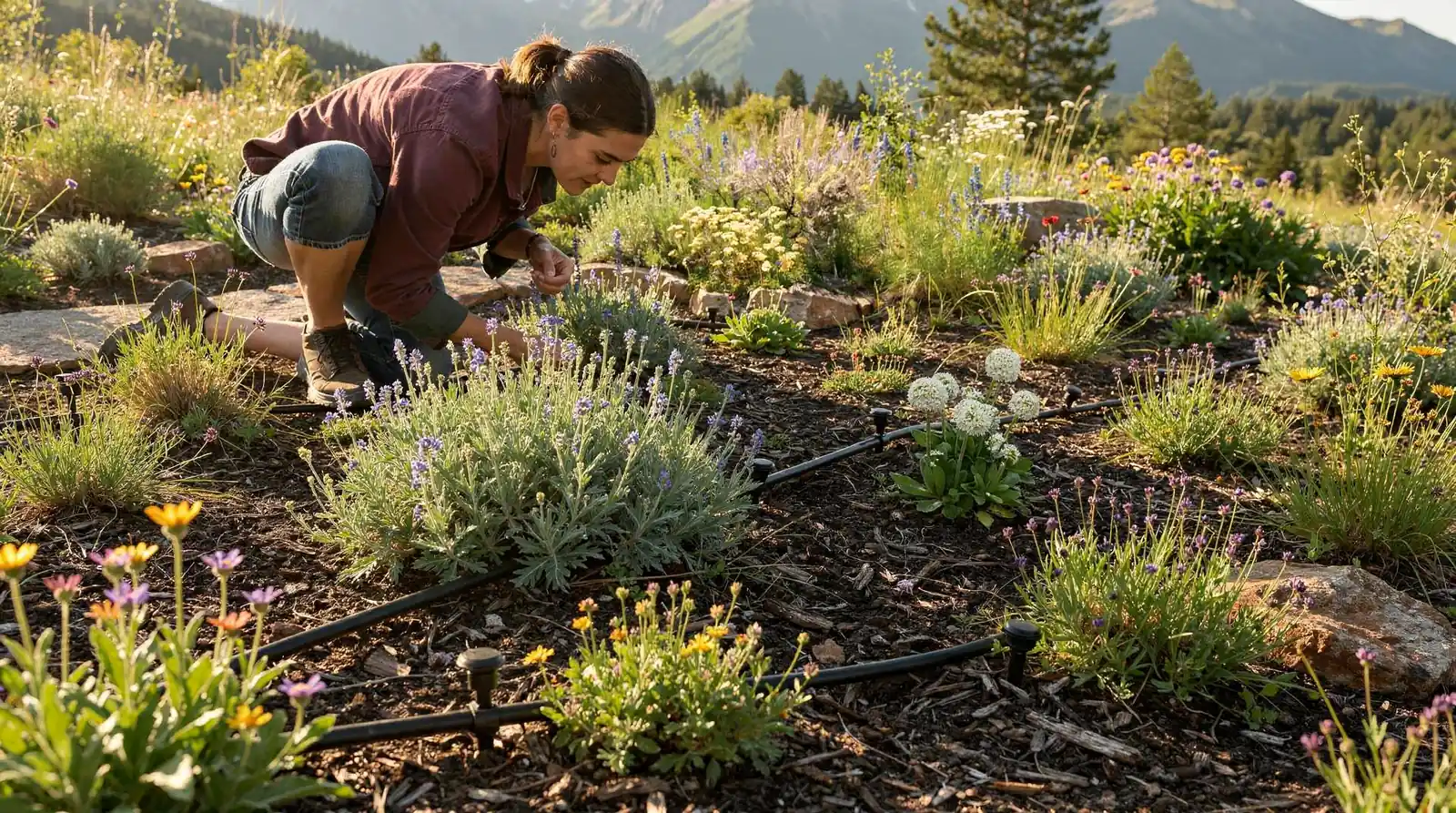
A smart system adjusts watering based on weather, soil moisture, and plant type rather than a fixed timer. Sensors detect when soil already holds enough moisture and skip a cycle automatically. This prevents overwatering during cool, wet stretches and reduces stress during dry heat waves common in the valley.
Does following the watering schedule actually help local streams?
Yes. Reduced outdoor water use keeps more flow in Gore Creek and supports fish, insects, and streamside vegetation. Following the current landscape watering schedule Vail authorities have set protects both property value and the watershed feeding the Eagle River.
Smart irrigation delivers compliance benefits that go beyond avoiding fines:
-
Matches watering times to permitted hours, easing pressure on ERWSD water restrictions
-
Reduces water waste through soil-moisture sensing rather than fixed schedules
-
Protects turf and plant investments during Stage III limits
-
Supports Gore Creek water conservation efforts tied to fish and wildlife habitat
Matches watering times to permitted hours, easing pressure on ERWSD water restrictions
Reduces water waste through soil-moisture sensing rather than fixed schedules
Protects turf and plant investments during Stage III limits
Supports Gore Creek water conservation efforts tied to fish and wildlife habitat
Earth Songs Gardening has installed and maintained irrigation systems throughout the Vail Valley, giving clients years of hands-on experience with high-altitude soil, seasonal drought cycles, and shifting municipal rules. That history informs every system designed for compliance today.
Which Plants Thrive Under Eagle County Limits?
Native and water-efficient species survive Vail’s tightened watering rules far better than traditional bluegrass lawns or imported ornamentals. Earth Songs Gardening builds landscapes around water-efficient and native species trees, perennials, and grasses, matching each plant to the natural character of the surrounding neighborhood. cite-1 This approach keeps yards looking full. Healthy without relying on heavy irrigation cycles that Stage III restrictions no longer allow.
Colorado’s mountain climate rewards plants adapted to elevation, temperature swings, and short growing seasons. Gardens designed around this reality hold up when watering days shrink. Hose-end nozzles get less use than homeowners are accustomed to.
What Should Homeowners Plant Instead of a Traditional Lawn?
Groundcovers, ornamental grasses, and native perennials replace thirsty turf without sacrificing curb appeal. These options root deeply, tolerate dry spells, and need far less supplemental water once established. Property managers overseeing HOA common areas often see the biggest savings by converting turf-heavy zones first.
Which Trees and Shrubs Handle High Altitude Best?
Species chosen for their tolerance of thin air, intense sun, and cold nights perform best in Vail’s terrain. Drought-tolerant landscaping Vail Valley projects depend on selecting trees. Shrubs already suited to these conditions, rather than forcing lowland varieties to adapt.
Consider the following categories when planning a landscape update:
-
Native grasses — establish quickly and require minimal irrigation once mature
-
Alpine perennials — bred for cold nights and short summers
-
Drought-adapted shrubs — provide structure without constant watering
-
Groundcovers — reduce erosion and replace water-hungry turf
Native grasses — establish quickly and require minimal irrigation once mature
Alpine perennials — bred for cold nights and short summers
Drought-adapted shrubs — provide structure without constant watering
Groundcovers — reduce erosion and replace water-hungry turf
Earth Songs Gardening’s design philosophy centers on water-wise landscaping Colorado mountains suited to Colorado’s mountain elevations, pairing plant selection with the region’s natural beauty rather than fighting against it. Landscapes built this way conserve water and protect the wildlife habitat along local waterways that depends on every gallon saved.
How Should HOAs and Businesses Plan Ahead?
HOA boards and commercial property managers avoid costly turf loss by acting before Vail’s growing season peaks, not after brown patches appear. Waiting until July to address Vail water restrictions 2026 guarantees higher water bills, stressed root systems, and emergency repair costs that early planning prevents entirely.
Every managed property should confirm which rules apply to its address. State, county, and district requirements often overlap, and a rule that governs a neighboring town may not match what Eagle County or the town of Vail enforces. Boards that skip this step risk fines and wasted irrigation cycles.
What should HOAs check before setting a watering plan?
Boards should verify current municipal restrictions before finalizing summer irrigation contracts. Confirming rules early — rather than mid-season. Preserves turf health and avoids scrambling to adjust systems once a Stage III water shortage Vail designation takes effect.
Does timing really matter for mountain properties?
Yes. Western Colorado properties face tighter margins for error than wetter regions, since snowpack runoff drives most of the water supply. Checking restrictions early in spring protects lawns before dry months set in.
A practical planning sequence looks like this:
-
Review current municipal and district watering rules for the property’s exact location.
-
Audit existing irrigation zones for leaks, outdated heads, or overwatering patterns.
-
Schedule professional design and installation work before peak summer demand.
-
Build a maintenance calendar that adjusts with seasonal restriction changes.
Review current municipal and district watering rules for the property’s exact location.
Audit existing irrigation zones for leaks, outdated heads, or overwatering patterns.
Schedule professional design and installation work before peak summer demand.
Build a maintenance calendar that adjusts with seasonal restriction changes.
Earth Songs Gardening supports HOAs and commercial clients throughout the Vail Valley with landscape design, installation, and ongoing maintenance built around these realities. cite-1 A twelve-person team serves the region from its Avon, CO base, delivering smart irrigation Vail properties can rely on without overtaxing local water resources. That combination of local knowledge and hands-on service gives boards a plan they can defend to residents and regulators alike.
What Should You Do Before Next Watering Day?
Preparation matters more than reaction under Vail water restrictions 2026. A quick property check before each cycle catches waste early. Keeps lawns from browning out under Stage III water shortage Vail limits. Skipping that check invites wasted water, patchy turf, and possible violations of ERWSD water restrictions.
What should a homeowner check before an approved watering day?
Three areas deserve attention: sprinkler heads, timers, and soil moisture. Cracked heads and misaligned spray patterns send water onto sidewalk instead of root zones, wasting supply the community cannot spare. Outdated timers often run longer than current rules allow. Resetting them to match the current landscape watering schedule Vail requires is essential.
Why does daily habit matter as much as the schedule itself?
Small, consistent habits protect the shared water supply more than any single watering session does. Turning off hoses fully, checking for leaks weekly, and avoiding midday watering all add up across a neighborhood. The Town’s plan exists to keep enough flow in Gore Creek. The Eagle River while still supplying homes and guests with adequate domestic water.
Before the next cycle, property owners should:
-
Inspect irrigation heads and drip lines for leaks or blockages
-
Confirm timers match current restriction days and hours
-
Test soil moisture rather than watering on a fixed guess
-
Correct common mistakes like overwatering slopes or hardscape overspray
Inspect irrigation heads and drip lines for leaks or blockages
Confirm timers match current restriction days and hours
Test soil moisture rather than watering on a fixed guess
Correct common mistakes like overwatering slopes or hardscape overspray
Gore Creek water conservation depends on these small corrections repeated across hundreds of properties. Earth Songs Gardening maintains irrigation systems and gardens throughout the Vail Valley, offering property owners a dependable resource for compliance-minded upkeep. cite-4 Reduced waste this season means healthier landscapes later, without gambling on fines or dead turf when restrictions tighten further.
Navigating Vail’s water restrictions requires thoughtful planning and strategic choices, yet the opportunity to cultivate a resilient landscape endures. By embracing drought-tolerant plantings, optimizing irrigation efficiency, and adopting sustainable practices, you transform constraints into design advantages. A landscape aligned with local climate realities not only conserves precious water but flourishes with authentic beauty. The investment in these practices today secures a thriving outdoor space for seasons to come.
FAQ
When can I water my landscape under Vail’s 2026 restrictions?
Watering is limited to before 10:00am or after 4:00pm, which reduces evaporation loss and keeps landscapes hydrated efficiently under the current rules.
Why did Vail adopt these water restrictions in 2026?
An unusually dry 2025/26 winter left mountain snowpack thin, prompting the Town of Vail to approve an outdoor water use reduction plan on June 2 to protect Gore Creek and the Eagle River.
How can Earth Songs Gardening help me comply with the restrictions?
Earth Songs Gardening, a 12-person team based in Avon, CO, designs water-wise landscapes and irrigation systems using smart scheduling, deep-but-infrequent watering, mulch retention, and drought-tolerant plantings to survive restrictions without sacrificing curb appeal.